

What is it microscopic colitis?
Microscopic colitis (MC) is a chronic disease and a form of Inflammatory Bowel Disease (IBD). It leads to inflammation in the lining of your colon, which can only be seen under a microscope.
MC was originally it was thought to be a rare disease, however more recently this thinking has been disproven. We know now that MC is as common as the other forms of IBD, such as Ulcerative colitis and Crohn’s disease.
MC is an easily treated condition when diagnosed, and usually presents as chronic, watery diarrhoea without blood.
Types of microscopic colitis
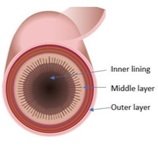
There are two recognised forms of microscopic colitis (MC). These are lymphocytic colitis (LC) and collagenous colitis (CC). Additionally, there is microscopic colitis incomplete (MCi); sometimes referred to in literature as MC not otherwise specified or paucicelluar LC.
Lymphocytic Colitis (LC)
This type presents by there being more white blood cells (lymphocytes) than usual in the inner lining of your gut.
Collagenous Colitis (CC)
This type presents by the inner lining of your gut having a thicker layer of a collagen, a protein important in providing structure in the body, than usual. There may also be more white blood cells present.
Microscopic Colitis incomplete (MCi)
This type is not currently recognised as MC. Here, the collagen layer and white bloods cells (lymphocytes) are abnormal, but not abnormal enough to class as LC or CC. However, there is still inflammation within the gut.
Symptoms
· Chronic, watery, non-bloody diarrhoea
· Nocturnal diarrhoea
· Abdominal pain
· Faecal incontinence
· Urgency
· Weight loss
· Fatigue
· Joint pain/muscle pain
Causes of microscopic colitis
The cause of microscopic colitis (MC) is still unknown. Although, there have been some links established that are thought to trigger the bodies immune system, leading it to attacking healthy cells in the gut.
· Damage to the gut lining. This could be from viruses, bacteria, certain medication or bile acid malabsorption
· Abnormal Immune function. Those who have autoimmune conditions appear to be more likely to develop MC
· Genetic Factor
· Other factors, such as smoking, one’s age, their gender and female hormones
· Diet potentially plays a part, however specific foods have not been identified as of yet
Those more likely to develop microscopic colitis
· It is 2-5 times more common in women than men
· 50-70 years old is the peak onset
· Those with other auto-immune conditions (coeliac disease, psoriasis, rheumatoid arthritis, thyroid disorders, T1DM and MS)
· Smokers
· Those who use the medications associated with MC
Diagnosis
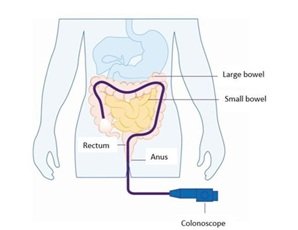
The only way to diagnose microscopic colitis (MC) is with a colonoscopy where biopsies are taken.
Missed diagnosis in the UK
The usual tests for inflammatory bowel disease (IBD) are stool tests, blood tests and a colonoscopy.
The stool test would look at something called ‘faecal calprotectin’. In active other forms of IBD (crohn’s and ulcerative colitis) a result more than 100mcg/g would suggest inflammation. However, we know that in MC, the faecal calprotectin levels are not generally above 100mcg/g.
The blood test would be checking your inflammatory markers (e.g. CRP), which would be raised in other forms of IBD. Again, in MC, these are usually normal, or rarely raised.
Furthermore, a colon suffering with MC would look normal to a colonoscopy, and it is not routine to have biopsies. Microscopic colitis can only be seen under the microscope, through biopsies.
Symptoms of MC are similar to irritable bowel syndrome, especially the diarrhoea prominent type. It is thought that 10% of IBS-D patients actually have undiagnosed MC.
Nutrition and Microscopic Colitis
In a flare
Diet has not currently been found to treat MC. There are currently no clinic guidelines of diet and microscopic colitis. However, it can be used to help improve diarrhoea symptoms whilst you are awaiting or beginning treatment.
· Aiming for 5-6 smaller meals throughout the day has been shown to help with diarrhoea. This is because it’s smaller portions of food for the body to try and digest. It also helps to make sure that we’re getting the nutrition we need.
· If you’re struggling with your oral intake and losing weight. It could help to opt for more nutrient dense foods (high calorie, high protein foods)
· Plenty of non-caffeinated fluids to replace the fluid you’re losing with diarrhoea
· Chew food well, taking time with meals and snacks
· Limit intake of spicy foods, caffeine, fatty foods and alcohol
· Some people find it helpful to reduce their intake of high fibre foods, but this differs for each individual.
Diet optimisation may also be needed for any overlapping digestive disorders. Such as, coeliac disease or lactose intolerance.
In remission
Similar to during a flare, there are currently no clinic guidelines of diet and microscopic colitis remission. However, the International Organization for the Study of Inflammatory Bowel Diseases (2020)2 published the following recommendations to help patients control their IBD and maintain remission. They encourage including a variety of plant-based products to help to optimise and strengthen your gut health, including:
· Fruits
· Vegetables
· Omega-3 fatty acids (nuts, seeds & wholegrains)
Fibres from these food groups breakdown and ferment into short-chain fatty acids (SCFAs), which have been shown to have potentially anti-inflammatory properties.
Red and Processed Meat, and Animal fats
International Organization for the Study of Inflammatory Bowel Diseases (2020) recommended to restrict the following foods.
· Saturated & Trans fats (mostly found in animal fats or processed foods)
· Dairy fats
· Red & Processed Meats
Current evidence show’s that diets low in fibre, and high in these foods, tend to be more associated with increased IBD inflammation. The current recommendation by the world health organisation (WHO) is currently no more than 70g red meat per week to reduce your health risks.
Plant-based proteins
Based on current evidence, increasing your plant-based proteins may be a way to decrease your red and processed meats, and animal fats.
These include beans, lentils, pulses, nuts, seeds, tofu, seitan, tempeh or meat alternatives.
Ultra-processed foods
Recent evidence is suggesting that certain additives found in ultra-processed foods could play a part in the development of IBD and also encourage inflammatory flares.
The following additives are advised to be limited or avoided if possible:
· Emulsifiers
· Artificial sweeteners
· Titanium Dioxide
· Carrageenans
Treatment
Current treatment is around stopping possible microscopic colitis (MC) triggers. Such as smoking or medications associated with it.
The main medication used to treat MC is Budesonide (which is a corticosteroid). Other medication that may be consider is:
· Antidiarrhoea medications (loperamide)
· Imunosupressants (Azathioprine and mercaptopurine)
· Biologics (Infliximab and adalimumab)
· Bile Acid Sequestrants If Microscopic Colitis is related to bile acid malabsorption (BAM) These include colestyramine, colestipol or colesevelam.
Most people start on a higher dose of budesonide to get the inflammation under control, then reduce the budesonide level to a low dose to help maintain remission.
Surgery
It is rare that surgery is required in MC
The takeaway message
We know that a microscopic colitis (MC) diagnosis can be overwhelming, and often patients have conflicting information about what they should be doing with their diet.
If you are experiencing microscopic colitis, or being investigated and need help. I would recommend always reaching out to a dietitian who specialises in these conditions and can give you tailored nutritional support.
I work a lot with IBD clients, helping them with their specific dietary needs during this challenging time. If you would like advise around diet or gastrointestinal symptoms, I am happy to help. Click here to book with me.
References:
1. Miehlke S, Guagnozzi D, Zabana Y, et al. European guidelines on microscopic colitis: United European Gastroenterology (UEG) and European Microscopic Colitis Group (EMCG) statements and recommendations. United European Gastroenterology Journal. 2020;0(0). doi:10.1177/2050640620951905
2. Münch A, Sanders DS, Molloy-Bland M, et al. Undiagnosed microscopic colitis: a hidden cause of chronic diarrhoea and a frequently missed treatment opportunityFrontline Gastroenterology 2020;11:228-234.
3. Pisani LF, Tontini GE, Marinoni B, Villanacci V, Bruni B, Vecchi M, Pastorelli L. Biomarkers and Microscopic Colitis: An Unmet Need in Clinical Practice. Front Med (Lausanne). 2017 May 10;4:54. doi: 10.3389/fmed.2017.00054. Erratum in: Front Med (Lausanne). 2020 Jan 31;7:4. PMID: 28540290; PMCID: PMC5423903.
4. Levine A, Rhodes JM, Lindsay JO, Abreu MT, Kamm MA, Gibson PR, Gasche C, Silverberg MS, Mahadevan U, Boneh RS, Wine E, Damas OM, Syme G, Trakman GL, Yao CK, Stockhamer S, Hammami MB, Garces LC, Rogler G, Koutroubakis IE, Ananthakrishnan AN, McKeever L, Lewis JD. Dietary Guidance From the International Organization for the Study of Inflammatory Bowel Diseases. Clin Gastroenterol Hepatol. 2020 May;18(6):1381-1392.