

Important nutrients to consider
Veganuary is great for introducing you to a new way of eating, getting more variety in your diet and helping the planet.
To help you on your vegan journey, I put together some information on some important nutrients for your to consider.
Protein
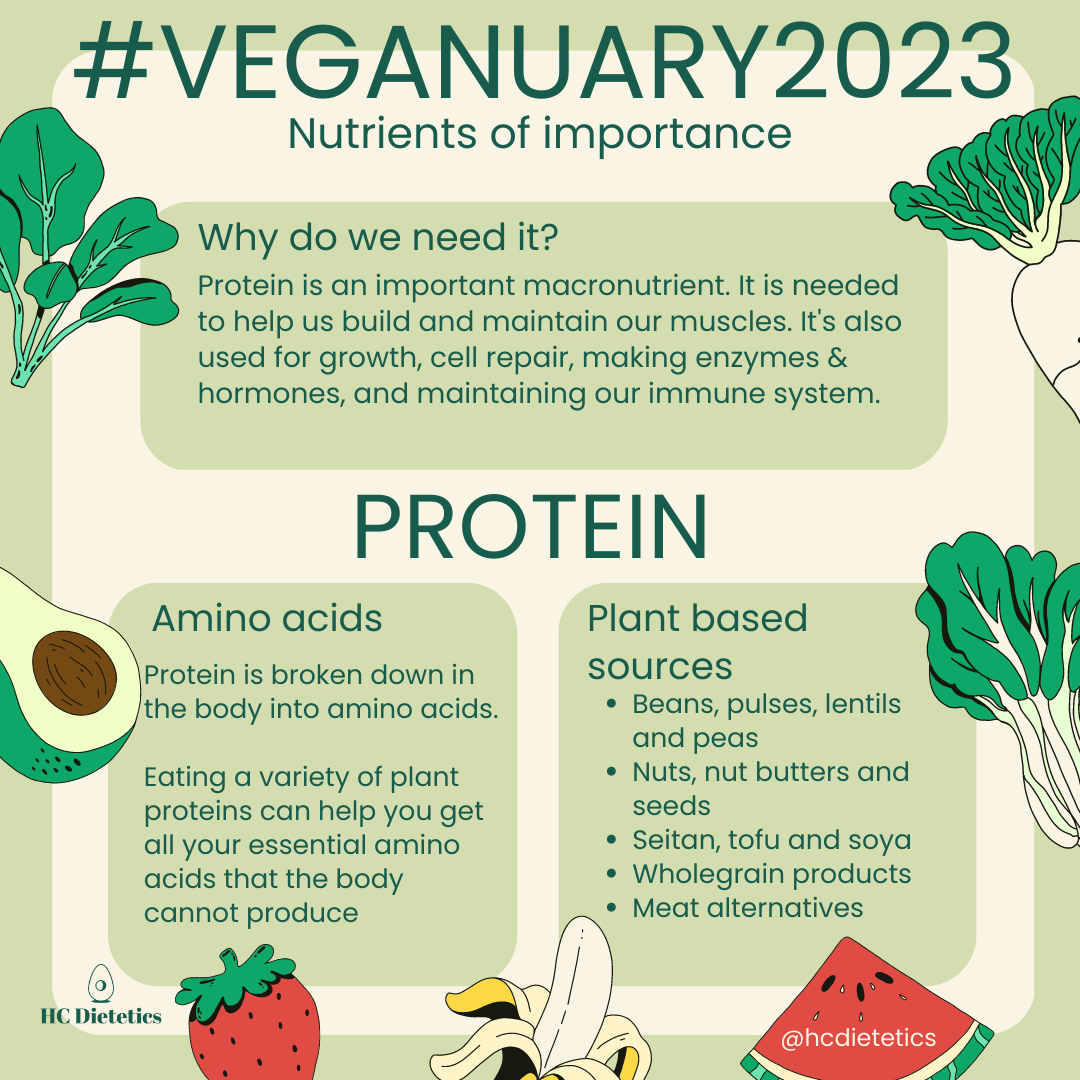
Protein is our first nutrient.
The question ‘where do vegan’s get their protein’ is a common question.
Plant-based proteins and plant-based foods can provide all the essential amino acids one needs to stay healthy. It’s not true that vegan’s don’t get enough protein. As long as you’re eating a variety of plant foods, plant proteins, and getting enough calories, then you’re likely getting enough protein too.
Plus, unless you’re doing extreme exercise, you likely don’t need extra protein.
Vitamin B12
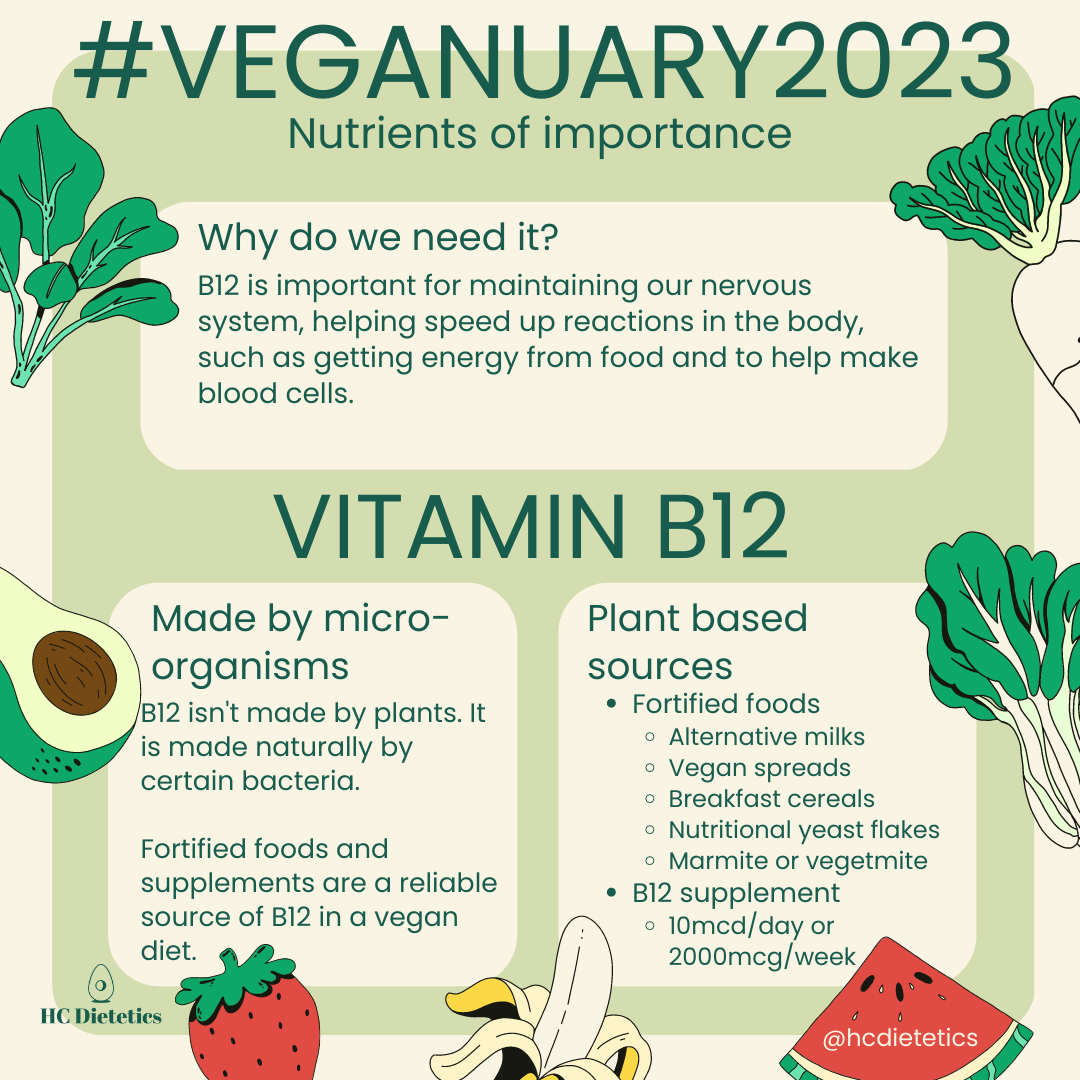
This vitamin is mainly found in animal products, even though it’s made from bacteria.
Vitamin B12 actually used to occur naturally on the surface of potatoes, beetroot, and other root vegetables, but the move away from natural fertilisers has caused it to disappear from our soil. This is because B12 is actually made in the colon. That’s right – B12 is in poo 💩
However, nowadays the most reliable plant-based sources of B12 are fortified foods.
The British Dietetic Association recommend eating vitamin B12 fortified foods “at least twice a day, aiming for 3 micrograms of vitamin B12 a day, or take a supplement – 10 micrograms daily or at least 2000 micrograms weekly”
Calcium
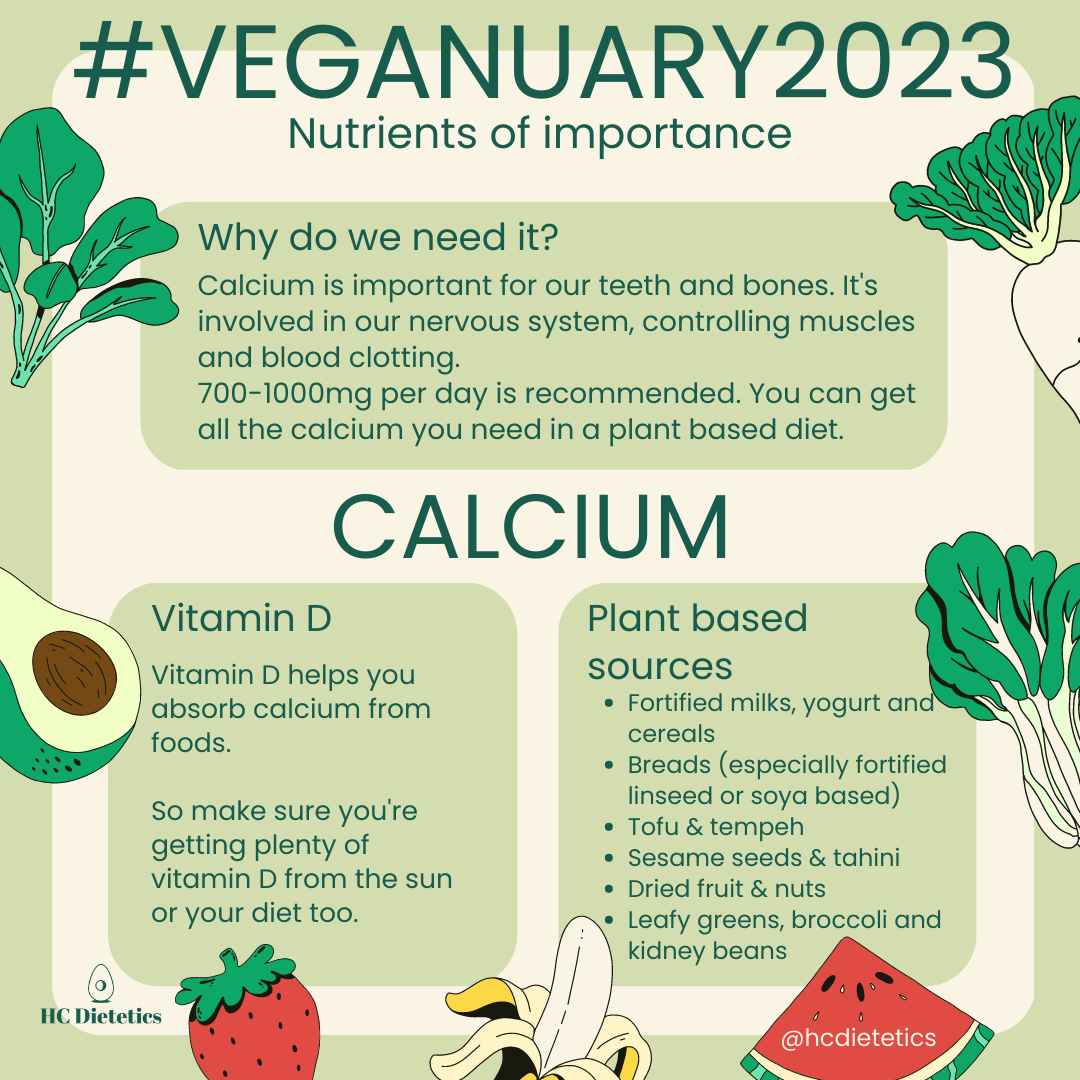
It is recommended we have 700-1000mg of this nutrient daily. Which is easily achieved on a plant based or vegan diet.
🍞Many of our breads in the UK are fortified with calcium and other important nutrients.
🥬Leafy greens is another great source; including kale and broccoli. However spinach is not, as the calcium is not biologically available.
🥛Calcium-fortified foods include alternative milks, yogurts and cereals.
👌Check the label to make sure these important nutrients are added into your food/drinks. Some brands, or organic products, don’t always add calcium.
If you’re following a vegan diet, the added vitamins and minerals in fortified foods can help you meet your daily nutrient requirements to avoid any potential deficiencies! These added nutrients are not harmful to your health.
Iodine
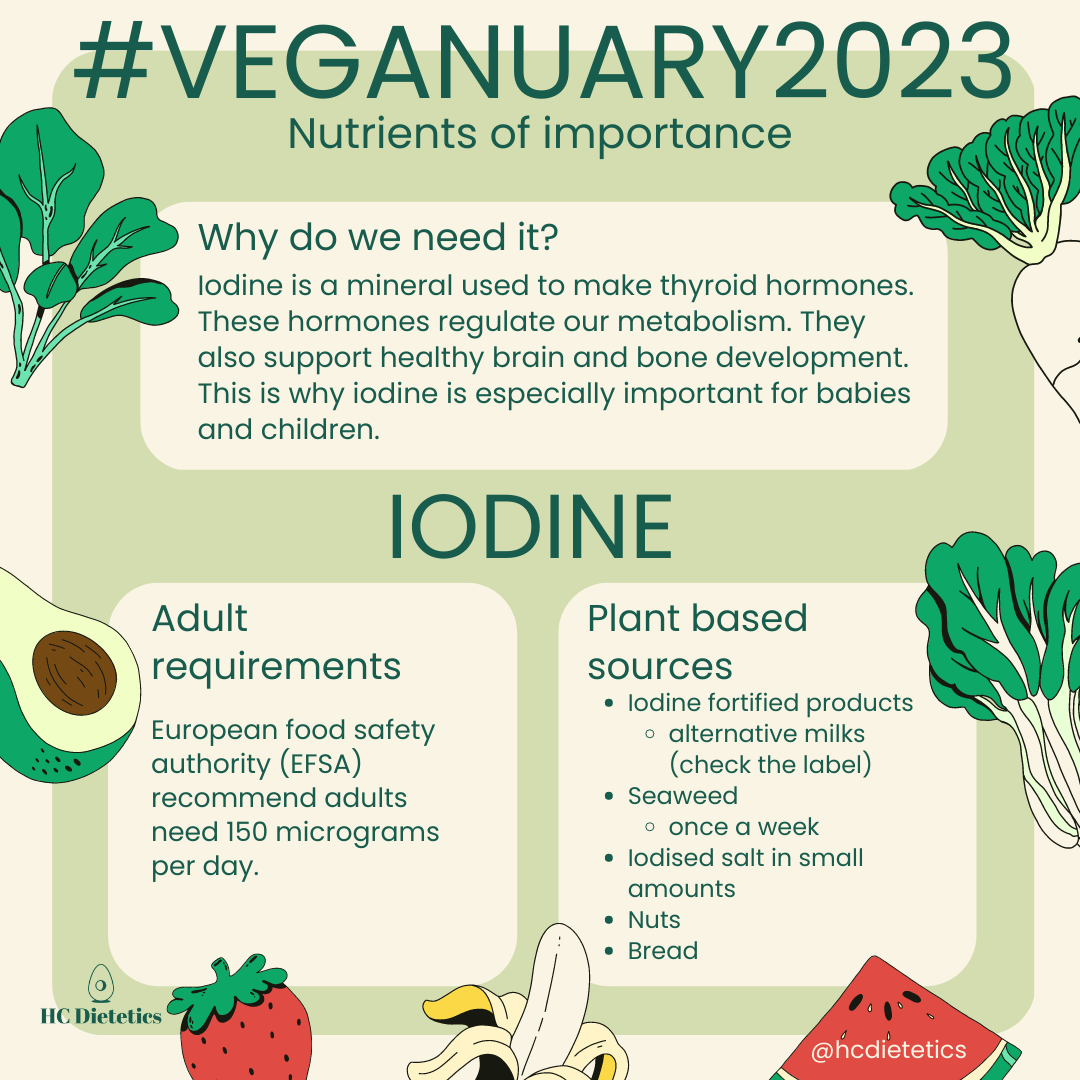
This one’s an important one. Too little iodine, and too much iodine can be harmful for us and effect our thyroid function.
🌱Iodine content can vary depending on the soil the plant is grown in.
🍙Seaweed varies greatly in its iodine content and is often very high in the mineral. Which is why it’s only recommended to have this once a week.
🧂You should also check the label of iodised salt to check it’s concentration and use this in small amounts.
If you’re concerned about your iodine intake, then check in with your GP and see if you need supplements.
Iron
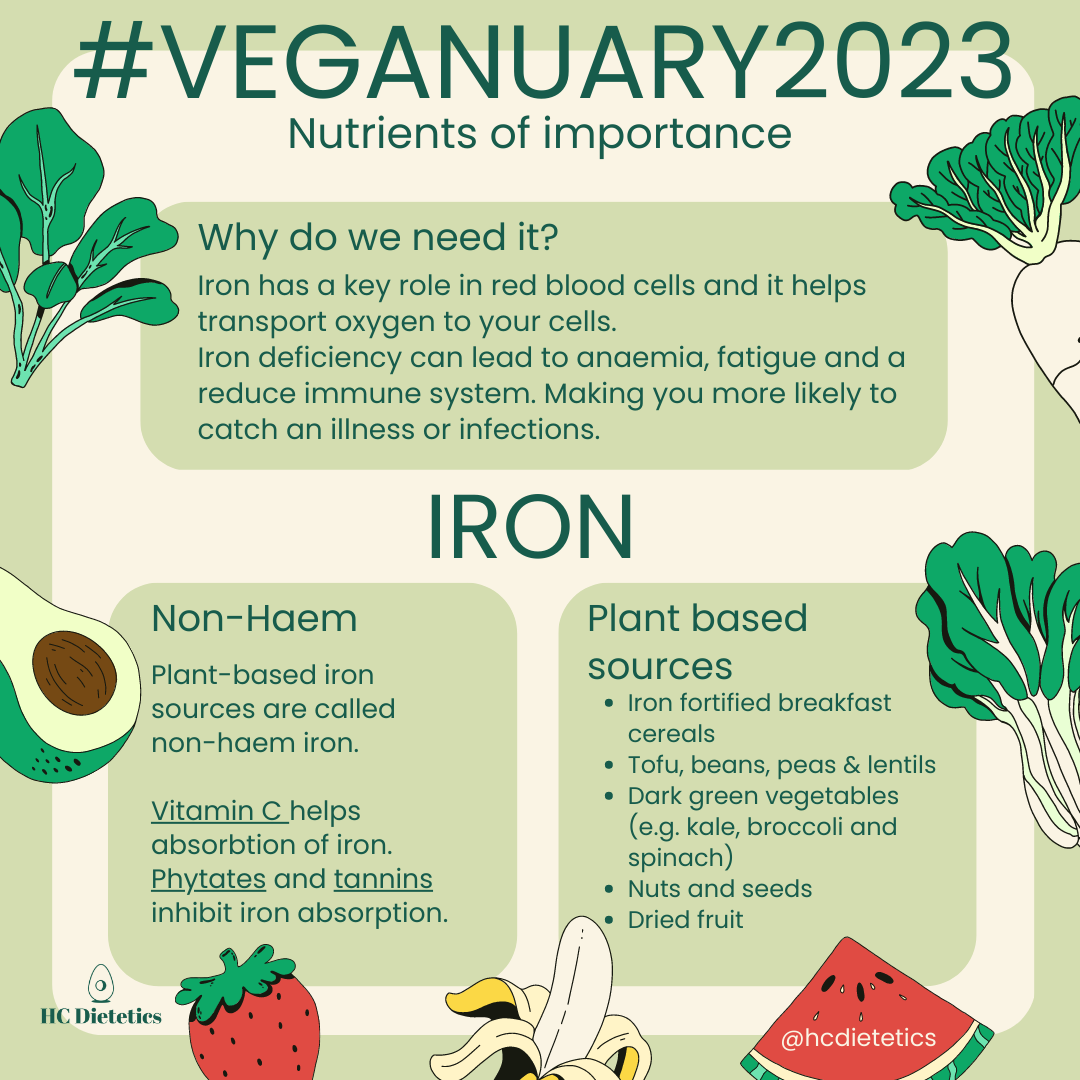
Plant based Iron is called ‘non-haem’ iron. Whereas animal based is called ‘haem iron’. It is thought that plant based iron is less bioavailable that haem iron. Therefore there are thing’s we can do to increase iron absorption.
🍊Vitamin C
This helps our bodies absorb iron.
Good sources of vitamin C include: pepper, broccoli, cabbage, Brussels sprouts, kiwifruit, oranges, strawberries, pineapple, grapefruit and orange juice.
Try combining vitamin C rich foods with Iron-rich foods to help your absorption.
🥣Phytates (Bran containing cereals or unleavened breads) can reduce iron absorption
☕️Tannins (in tea and coffee) also inhibit iron absorption.
Therefore it’s recommended not to wait to drink your tea or coffee until after your meal.
Omega 3
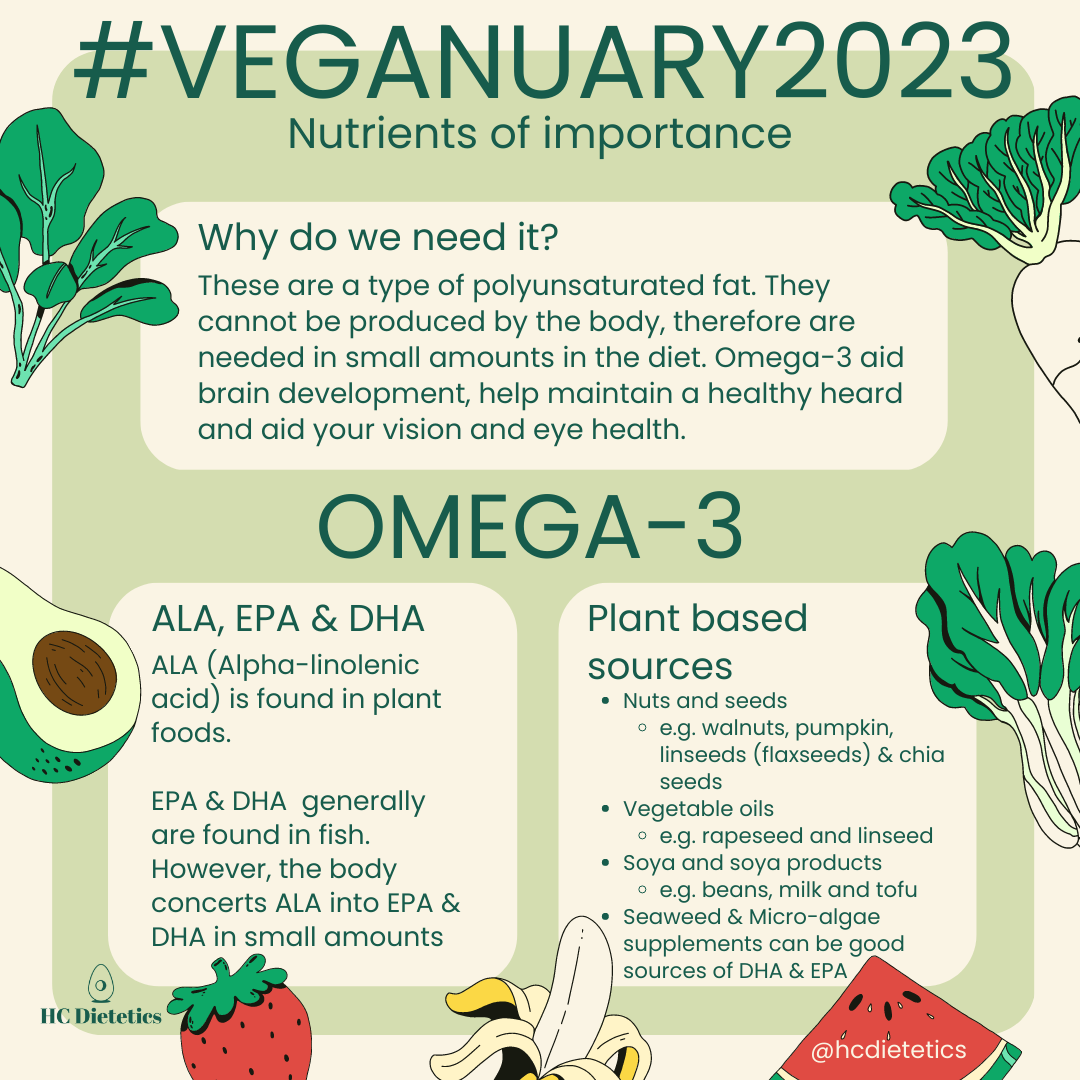
There are 3 main omega-3 fats:
ALA – alpha-linolenic acid
EPA – eicosapentaenoic acid
DHA – docosahexaenoic acid
🥜ALA comes from the plant-based foods listed.
🐟 EPA & DHA are found in usually found fish, but can also come from seaweed and micro-algae supplements
The body converts some ALA from the food the plant-based sources to EPA and DHA, but only in small amounts. Some research has suggested vegans may need to have double to amount of omega-3 due to these conversions; some evidence has suggested seaweed and micro-algae could be useful sources of EPA & DHA.
More research is needed around these supplements.
Omega 6
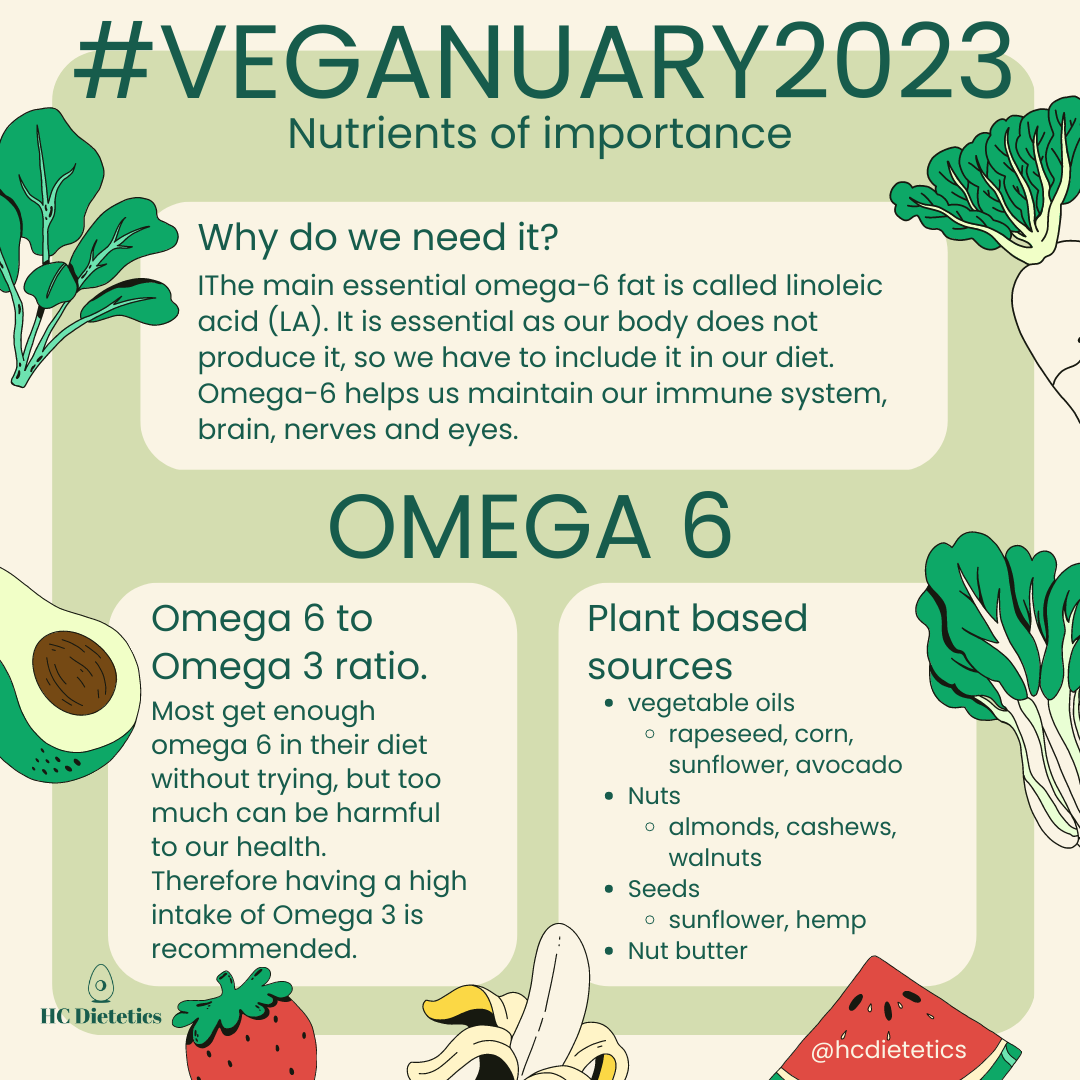
Most people get this nutrient without trying. Omega 6 is another polyunsaturated fat. However, when taken in excess, it can be harmful. Thankfully, if we aim to have more omega-3 rich foods, this keeps the balance healthy and it’s beneficial for our health.
Selenium
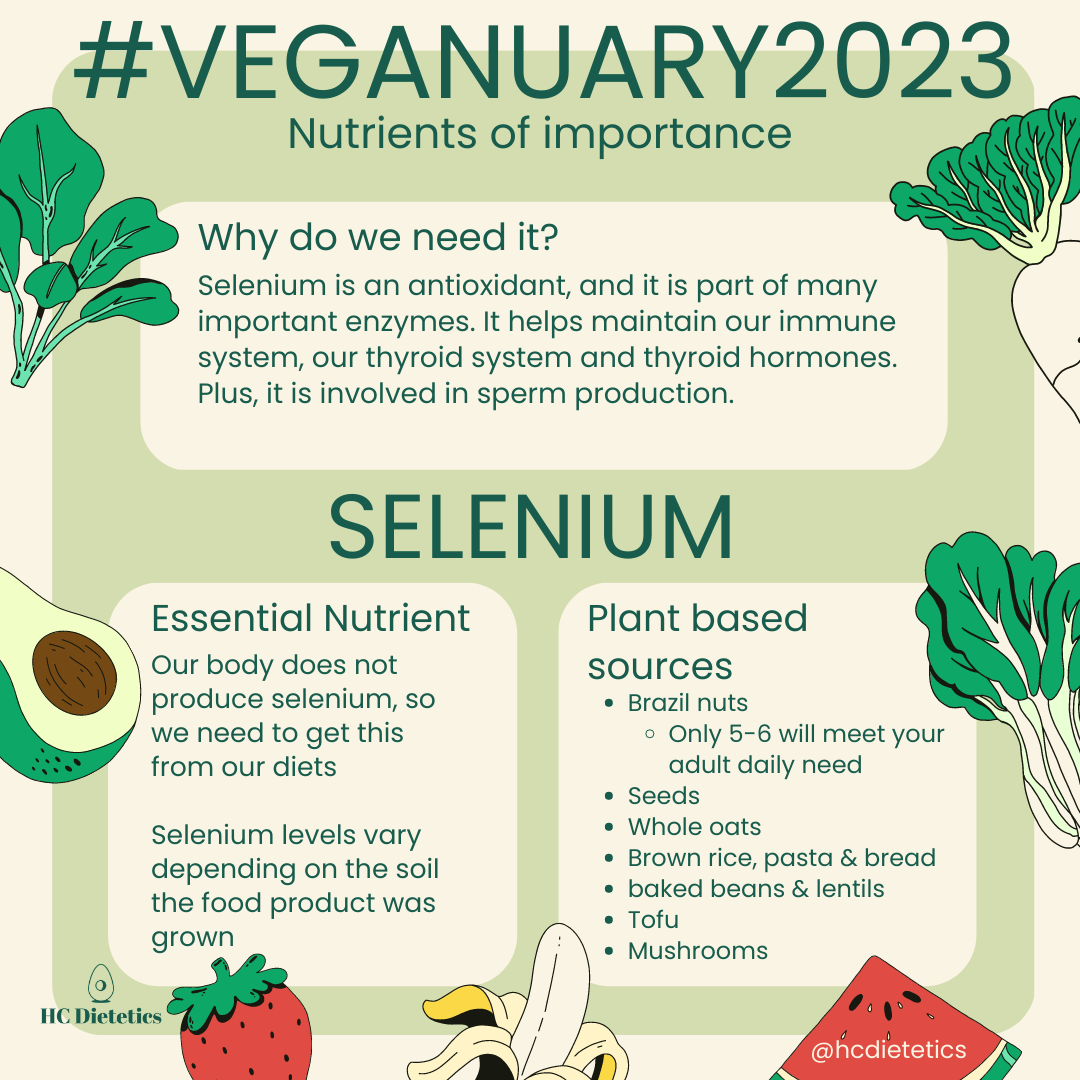
Selenium is an important mineral needed in the diet, as our bodies don’t produce it.
🥜Brazil nuts are an excellent source of selenium and there are plenty of other good sources as listed. However, the amounts vary in the foods depending on the quality of soil it was grown in.
💊 If you’re worried, you can always consider a supplement. Although, too much selenium can be toxic, so stay within the UK recommendations (60 micrograms for women, 75 micrograms for men)
Magnesium
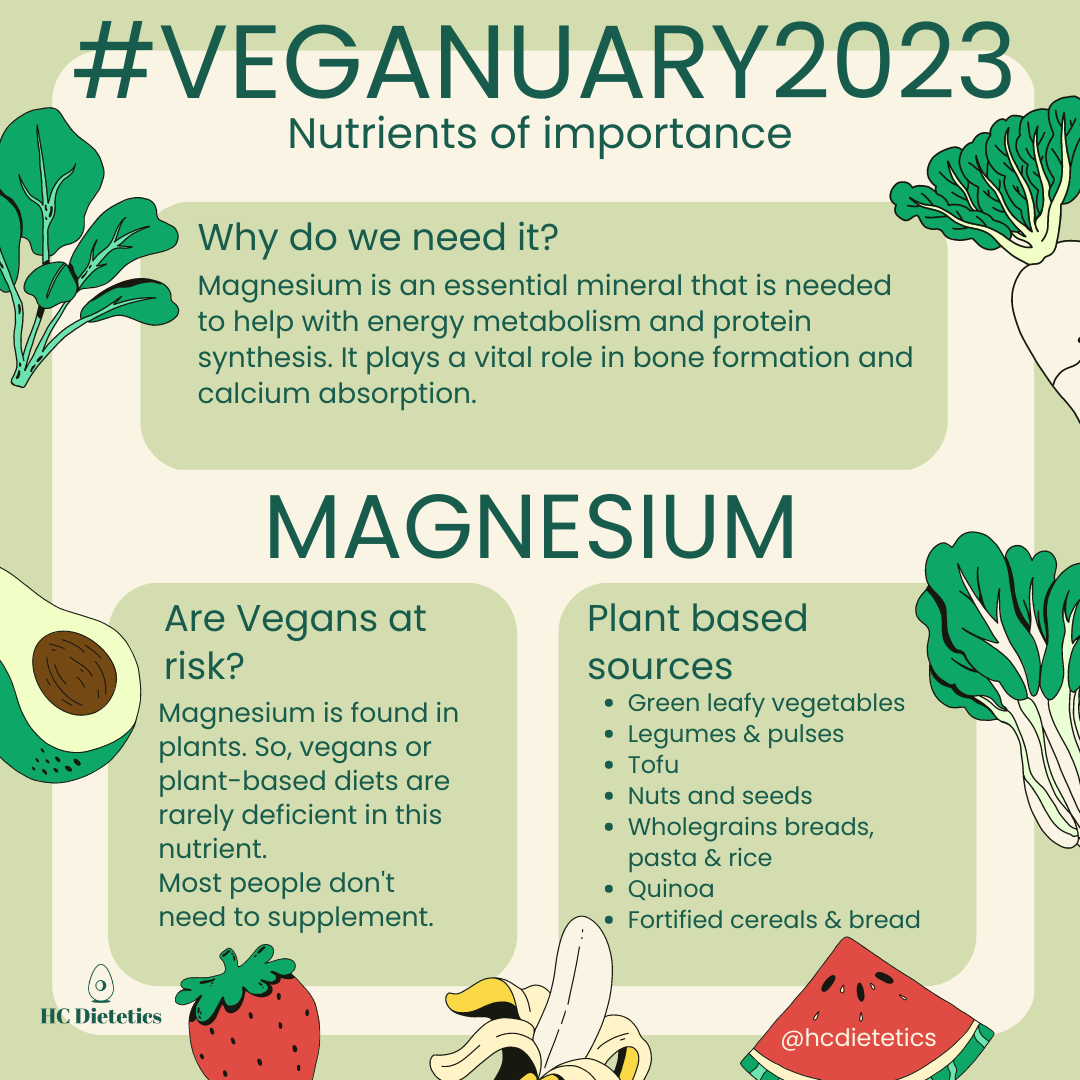
🥬Magnesium is an essential mineral, and one that plant-based diets are rarely deficient in. This is because magnesium primarily comes from plants and wholegrains.
🍞FUN FACT! Choosing the wholegrain version of bread, pasta or rice makes sure that you’re getting magnesium in your diets. The milling process used to give us the more refined carbs (white versions) actually removes a lot of the important nutrients – like magnesium.
Vitamin D
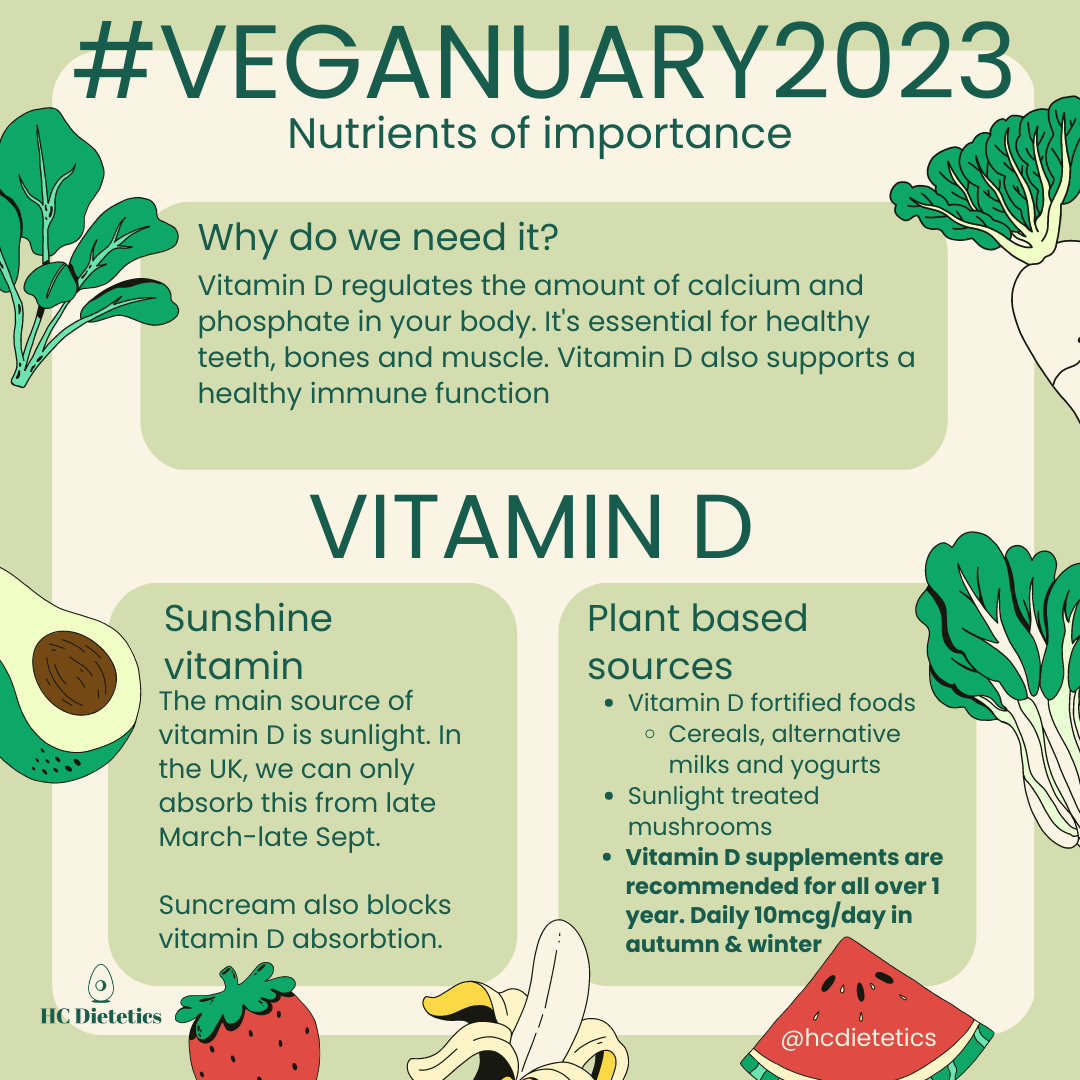
The sunshine vitamin ☀️!
Adults and children (over 1 year) are recommended by Public Health England (PHE) to take a daily vitamin D supplement of 10 micrograms or 400 international units (IU).
☀️Normally we absorb our vitamin D through our skin, but in the UK this is only from late March to end of September. Therefore supplementation is recommended during the autumn and winter months.
Those with darker skin, or who cover up all the time are recommended to take the supplement all year round.
💊Some vitamin D products are not suitable for vegans. So check the label. Vitamin D2 & lichen-derived D3 are vegan friendly.
Vitamin A
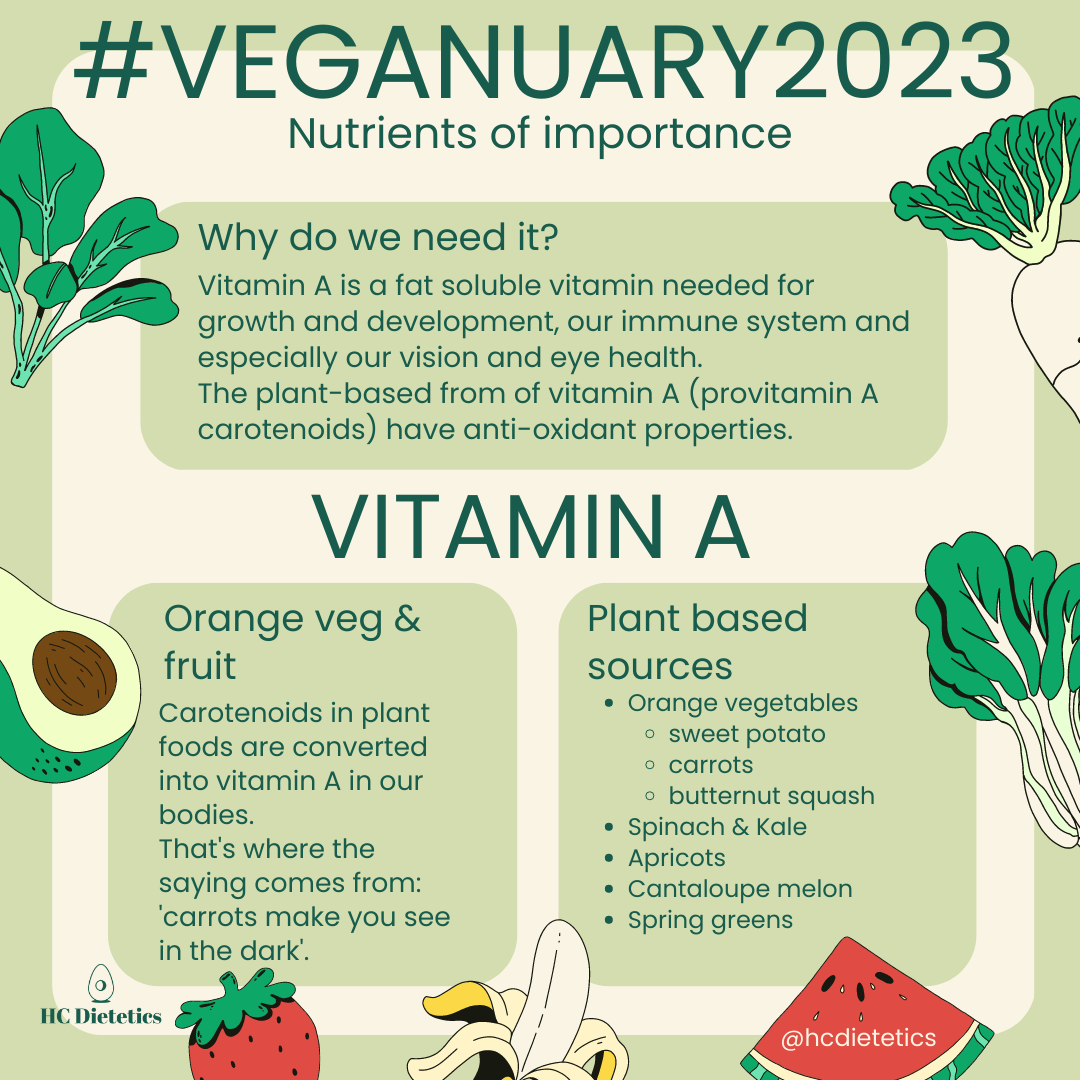
Two forms of vitamin A are found in food.
– Preformed vitamin A – comes from animal sources
– Provitamin A carotenoids – comes from plant-based sources
🤓The body is amazing, as it converts the plant based carotenoids into vitamin A’s active form in the body.
And as we know, vitamin A is important for your vision and eye health.
🥕Hence why carrots make you see in the dark!
Vitamin K
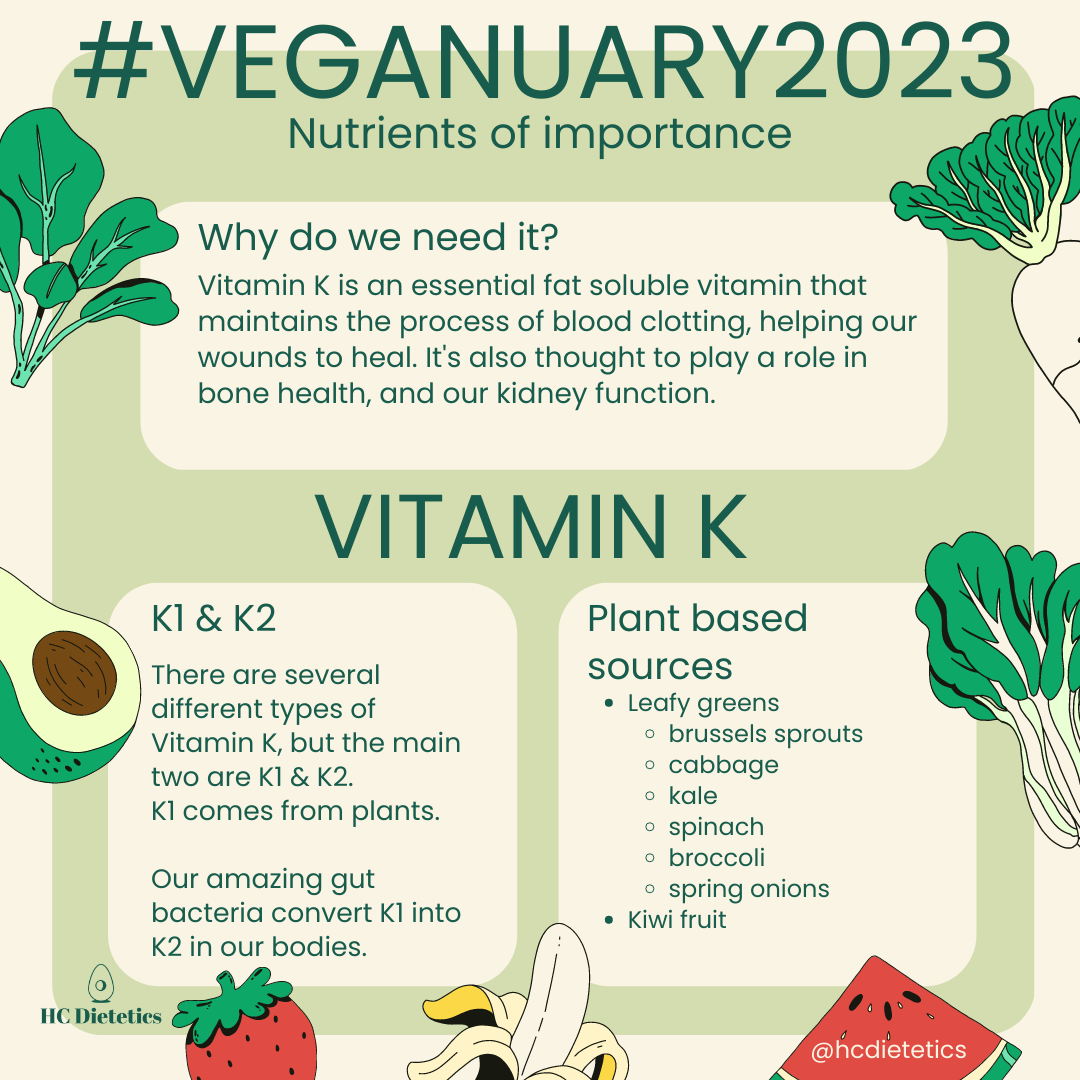
There are lots of different types of vitamin K, but the two most often found in the human diet are vitamin K1 and vitamin K2.
K1 tends to come from our green veggies, whereas K2 tends to come from animals.
Plant-based diets don’t miss out on K2 though, don’t worry. Our amazing gut bacteria convert K1 to K2 which we then absorb.
Zinc
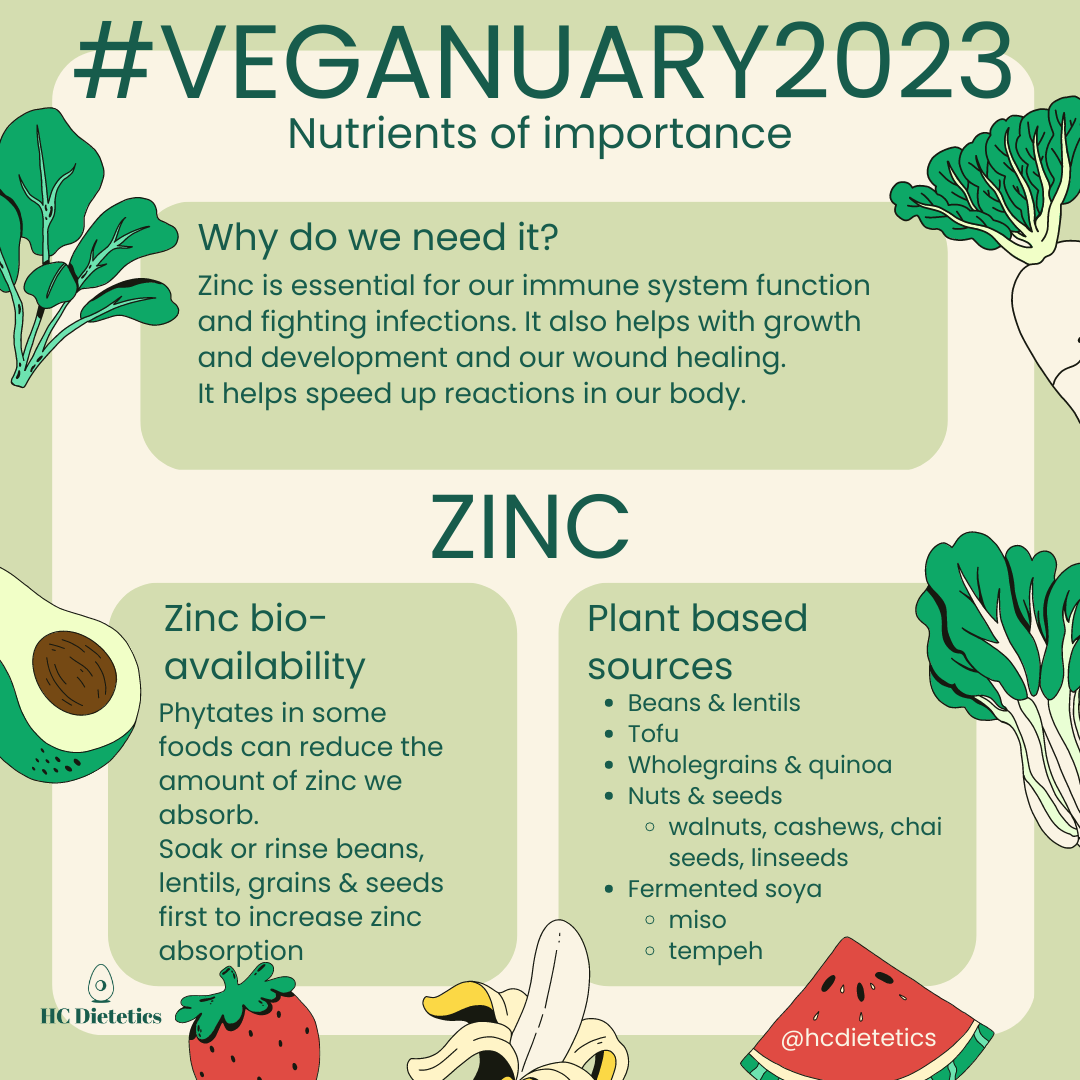
Did you know? Phytates in some plant foods (like beans) bind to zinc and reduce how much zinc we can absorb from them. Thankfully, soaking or rinsing them can reduce the phytate content of these foods.
🌱Sprouting beans or seeds can also reduce the phytate content. I’ve never tried this myself, let me know if you have?
If you eat a varied plant-based diet, it’s likely you’re meeting your Zinc requirements.
Generally, as long as you have a varied diet, you should be able to meet your nutritional requirements.
I hope you found this blog post helpful.
Are you going vegan and are worried about getting all the important nutritients? Contact me and we’ll work together to see what your next steps are.
I’m a Manchester and Cheshire based private dietitian who specialises in vegan, sustainable diets.
Thank you for reading!